Home Blog

Are humanoid robots worth it? Pros and cons

Humanoid robots are developing more and more, and in the coming years they could become part of our everyday lives at any moment—both in various places such as restaurants and supermarket checkouts, but also simply in our homes as assistants fully taking care of household tasks.

However, we are entitled to ask whether it is currently worthwhile to own such a robot. Indeed, the technology is still new and constantly evolving, and we should not forget that even the cheapest models require spending between $5,000 and $10,000.

It is therefore a significant investment that should not be underestimated, but through this article let us try to take stock of the already very real advantages and the disadvantages that still exist for the moment.

An ability to adapt to all situations

Humanoid robots are designed to resemble humans in the way they move and also in the way they grasp objects, as if they had hands.

This makes them extremely versatile in any environment; they can adapt and perform many tasks with such a basic set of capabilities.

Obviously, this is a major advantage because, unlike human beings, they can technically carry out their tasks non-stop and efficiently without the potential risk of human error.

In addition, beyond their ability to adapt, even though they could become a new workforce that might eliminate many jobs, in countries where the population is aging and requires care—whether at home or for carrying out heavy workloads—these humanoid robots are an obvious solution.

Consequently, they are already capable of adapting to most common situations and carrying heavy loads, which is a real advantage.

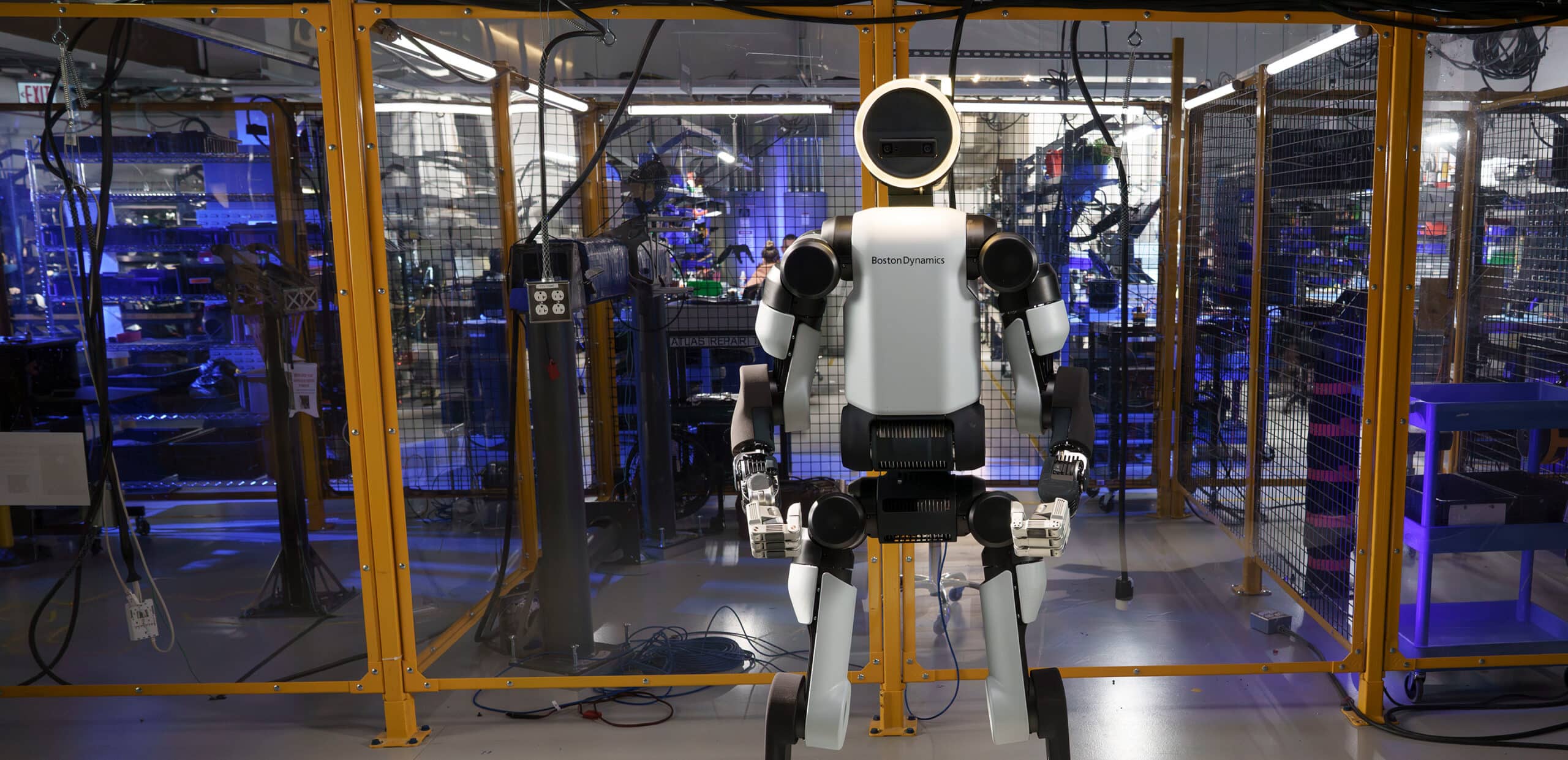
This is particularly the case with Atlas from Boston Dynamics which, although mainly a solution aimed at companies, can carry significant weights ranging from 30 to 50 kilograms.

Unfailing precision

From a technical standpoint, humanoid robots possess extremely precise dexterity. The technology is developing extremely quickly, and surpassing the hands of human beings is no longer a dream.

Of course, each robot has different dexterity depending on the needs and tasks it is supposed to perform, but they are capable of carrying out actions with an extremely high degree of precision.

This therefore helps reduce errors—particularly human errors—and, in industrial contexts, also reduces costs. Indeed, any mistake generally leads to a loss of time or even a loss of materials. Eliminating these errors is therefore a gain in both time and efficiency.

Endless productivity

Although this point may be more nuanced—especially for humanoid robots used by individuals, which have batteries and generally a battery life of 2 to 4 hours—the situation is different in the professional world.

Indeed, robots do not necessarily operate on batteries, or even if they do, companies can own several of them, allowing them to work 24 hours a day without interruption. This leads to productivity with no downtime and far greater efficiency.

To go further, although there is still the risk that many professions may disappear in favor of these humanoid robots, automated endless productivity also means lower costs in the long term.

Obviously, there are no salaries to pay, which generally represents a major expense for any company that requires a large workforce.

A significant investment

Although humanoid robots already have many advantages—particularly in the professional world, where they enable flawless productivity, limit errors, and perform tasks faster than humans with very high precision—they are far from perfect.

This is especially true for humanoid robots intended for individuals, but it also applies to businesses; everything is still far from being flawless.

The first obvious point, both for individuals and companies, is the cost of these machines. For the general public, buying a humanoid robot whose relevance, usefulness, and effectiveness are still uncertain—especially when it costs as much as a car—remains a difficult decision.

Of course, over the years and with the adoption of this new technology, costs should decrease so that the price becomes more reasonable, but for now it will not be accessible to everyone.

While, on the hardware side, these humanoid robots are becoming increasingly effective—especially in factories, where they outperform humans significantly due to the organized environment—the chaos of a home makes things much more complicated.

Indeed, these humanoid robots still need to learn, particularly in terms of their artificial intelligence, in order to operate fully in a home or even on the street to complete their tasks efficiently.

As a result, for now, they are extremely slow at performing even simple tasks and meticulous in analyzing their environment and adapting. Once again, over the years, this will improve and be resolved, but currently, it is still too fragile for individual users.

A questionable operating time

Where, once again, in the professional field, this disadvantage is less noticeable because robots can operate on mains power or companies can have a fleet, using some robots while others recharge their batteries. This solution, however, is not feasible for individuals given the cost of such a product.

As a result, not only do the batteries wear out over time, but their autonomy is generally only 2 to 4 hours of use. This allows for completing a few tasks, but depending on their operating speed, it is not much.

Battery life technology, as well as the overall lifespan of these machines, will need to become more reliable in the long term for this to be a practical and efficient long-term purchase.

Some ethical concerns

Rather than defining this point as a disadvantage, it is primarily an open question: what will the world look like if humanoid robots replace manual workers?

Today, many are concerned that the evolution of artificial intelligence will eliminate certain jobs. Humanoid robots could represent a kind of second wave in a few years, but this time affecting manual tasks.

From a safety perspective, artificial intelligence carries risks, because the more it develops, the more potentially intelligent it becomes and could pose a threat to us. Indirectly, even if humanoid robots are different, they could follow the same path with their own AI, even though numerous safeguards are in place.

On a more practical note, we are also justified in wondering what would happen if a programmer managed to bypass the security systems of such a humanoid robot to equip it with a weapon.

To conclude, this technology is a logical evolution that will happen and eventually become standard. Of course, it will still take a few years; for now, we are only at the beginning. However, many companies, such as Tesla, are determined to bring humanoid robots into our lives as quickly as possible.

PAL Robotics, Europe’s challenger in the humanoid robot race

Europe rarely appears at the center of the global race for humanoid robots. Yet one company has been quietly building expertise in the field for more than two decades. Based in Barcelona, PAL Robotics is among the continent’s oldest humanoid robotics developers and continues to push new platforms for research and industry. But according to its CEO Francesco Ferro, Europe risks losing ground in a sector it helped pioneer, as Chinese and American competitors benefit from stronger industrial ecosystems, massive funding and faster execution.

Founded in 2004, PAL Robotics has built several generations of humanoid robots, from REEM-A to REEM-C and later TALOS, a research platform widely used in European laboratories. The company now employs teams in Barcelona, Toulouse and Italy, and serves clients across logistics, retail, healthcare and agriculture. At this year’s Mobile World Congress in Barcelona, the company unveiled its latest humanoid robot, Kangaroo, a system designed to integrate advanced perception and force control.

Despite this technological progress, Ferro warns that Europe’s position in robotics is becoming increasingly fragile. “We are losing know-how that we helped build,” he says, pointing to the growing gap between Europe and its global competitors.

A European robotics pioneer facing global competition

PAL Robotics has long been part of Europe’s robotics ecosystem. Over the past two decades, the company has developed humanoid platforms designed primarily for research and industrial experimentation.

Its best-known robot, TALOS, was introduced in 2017 and developed in collaboration with the LAAS-CNRS laboratory in Toulouse. The bipedal humanoid was designed as a research platform for dynamic locomotion and advanced manipulation. Equipped with torque-controlled joints and sophisticated sensors, TALOS allows researchers to study how robots can walk, balance and interact with complex environments.

TALOS quickly became a reference platform for European robotics labs and research projects. One of the early industrial partners exploring humanoid robots with PAL Robotics was Airbus, which tested the use of bipedal robots for factory operations.

The company’s newest humanoid, Kangaroo, builds on this technological lineage. The robot integrates advanced perception systems and torque control embedded in its joints, allowing it to interact safely with its surroundings.

For Ferro, the technology reflects years of accumulated research. Kangaroo, he explains, represents “the state of the art in robotics in terms of sensors and perception,” enabling more precise and dynamic interactions with the environment.

Yet technological progress alone may not be enough to secure Europe’s place in the global race. Ferro believes the continent is struggling to keep pace with faster-moving competitors.

“In Europe, on the bureaucratic side, we have not yet found the right rhythm to move forward,” he says. “Meanwhile we are competing on a global stage.”

Chinese robotics companies such as Unitree and AgiBot benefit from significant state support and large-scale manufacturing capabilities. In the United States, robotics startups can rely on venture capital and partnerships with major industrial companies eager to deploy automation technologies.

Europe, Ferro argues, lacks both the scale of funding and the industrial momentum seen elsewhere. “Sometimes, instead of feeling supported, we feel more constrained,” he says.

A diversified robotics portfolio beyond humanoids

Although humanoid robots attract the most attention, PAL Robotics’ business extends far beyond bipedal machines.

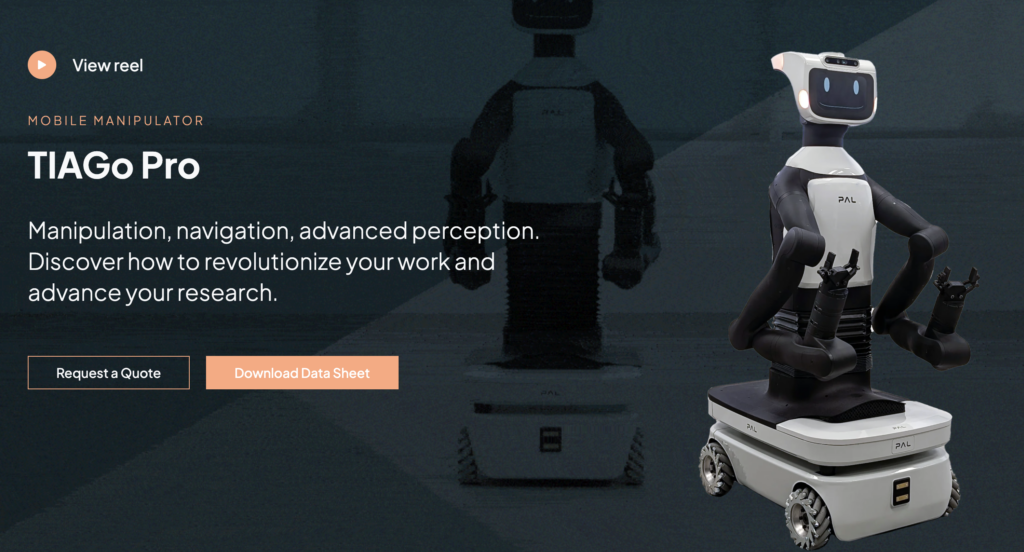
One major activity focuses on mobile manipulation robots, particularly the TIAGo Pro platform. These robots combine mobile bases with robotic arms capable of performing pick-and-place operations, moving objects and collaborating with other automated systems in logistics or manufacturing environments.

Tiago Pro PAL Robotics

Another business unit focuses on intralogistics and retail automation. The company’s StockBot robots are designed to perform autonomous inventory checks inside retail stores. Equipped with sensors and computer vision systems, the robots can scan shelves and detect stock levels.

PAL Robotics has deployed these systems with retailers such as Decathlon. According to the company, its robots now operate in around fifteen countries and perform daily inventory tasks in stores across roughly forty markets.

The company is also expanding into new sectors. Healthcare is one promising area, particularly in hospitals and elderly care facilities where staff shortages are becoming a growing concern. PAL Robotics is currently involved in several pilot projects exploring how robots could assist caregivers and patients.

Agriculture represents another strategic market. In European research projects, the company is developing robotic solutions capable of operating in vineyards to help with tasks such as grape harvesting or pruning.

“The agriculture sector is strategic,” Ferro says. “Labor is becoming scarce, while food production remains a fundamental and long-term need.”

The industrial and economic challenges of robotics in Europe

Despite growing demand for automation, building robots in Europe remains difficult.

The cost of advanced robots has dropped significantly over the past decade. According to Ferro, machines that once cost up to €900,000 can now be built for around €200,000. Yet European manufacturers still struggle to compete with Asian companies on price.

Part of the problem lies in supply chains. While PAL Robotics tries to source motors, gearboxes and electronics from European suppliers, many critical components, such as certain batteries or electronic parts, are only available from Asian manufacturers.

The Covid-19 pandemic highlighted these vulnerabilities. Component shortages disrupted production and underscored the importance of maintaining local manufacturing capabilities for strategic technologies.

Beyond hardware challenges, robotics development also requires complex integration work across mechanical engineering, electronics, control systems and software. Ensuring reliability remains one of the biggest hurdles: in many industrial sectors, robots must approach near-perfect uptime to be economically viable.

For Ferro, the long-term rationale behind humanoid robots remains clear. Factories, warehouses and infrastructure were designed for humans, not machines.

“It’s very simple,” he says. “All existing factories were designed for people. Humanoid robots can integrate into those environments.”

But whether Europe will remain a major player in that future remains uncertain. Without stronger industrial support and faster execution, Ferro fears the continent could gradually fall behind in one of the defining technologies of the coming decades.

AgiBot Claims 5,000 Robots in 2025, Eyes Europe Next

The humanoid robot race is shifting from prototype demonstrations to early industrial scaling. Chinese start-up AgiBot claims it produced more than 5,000 robots in 2025, roughly 40% of global output in a market estimated at around 13,000 units last year. Now, the company is targeting Europe as its next growth frontier.

At the Mobile World Congress, William Shi, President of AgiBot Europe and former head of Huawei France, laid out a strategy centered on ecosystem building, localization and partnerships. His thesis: humanoid robots are structurally suited to human environments — but scaling them remains a data and production challenge.

Scaling Production in a Nascent Global Market

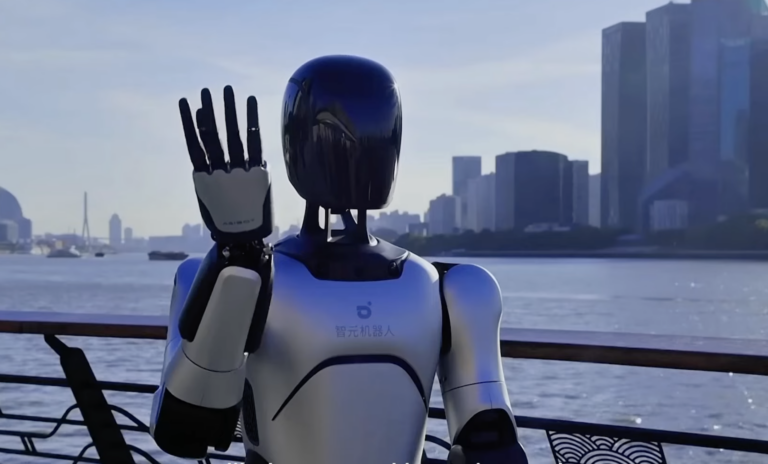
Founded in 2023, AgiBot has structured its offering around three product lines. Lumi (X2 series), a 35-kilogram humanoid robot designed for entertainment and events; A2, a full-size humanoid built for public interaction in retail or transport hubs; and G2, an industrial-oriented platform currently performing simple tasks in factories. All three are already sold in China and technically ready for European export.

Based on internal estimates and industry reports, Shi says global humanoid production reached about 13,000 units last year. “In 2025, our production exceeded 5,000 units, representing about 40% of the global market.” He adds: “We are therefore ranked number one worldwide in terms of volume — although that does not mean much at this stage.”

The nuance is important. Tens of thousands of units remain marginal compared to automotive or even industrial robotics volumes. “Today, 10,000 or 20,000 units is still very small. The most important thing is to build the right ecosystems and work together.” Shi compares the sector to the early automotive industry: specialization across motors, design, software and manufacturing will likely define the next phase.

Competition is intense on both sides of the Pacific. In the United States, Tesla, Figure AI and Agility Robotics are pushing industrial automation. In China, players such as Unitree Robotics and Fourier Intelligence are expanding aggressively.Yet Shi argues that all actors face the same structural bottlenecks: scaling hardware production and collecting sufficient embodied AI data. “For this new generation of robots, we need enormous volumes of data. We still do not have enough data to rapidly evolve AI systems.” Unlike large language models trained on web-scale text, humanoid systems must learn from physical interaction — manipulation, balance, tool use — which is slower and costlier to capture.

Price remains another constraint. “Today, prices are still high. A robot costs almost as much as a car.” AgiBot’s entry models start around $20,000. However, Shi expects costs to decline as automation and competition intensify. “With competition, prices fall and technology advances faster.” The company is also developing an 80-centimeter consumer-oriented robot aimed at improving affordability.

Europe as a Strategic Ecosystem Play

For AgiBot, Europe is not simply an export market — it is a strategic terrain. “The European market is strategic for us. It is still at an early stage in humanoid robotics and does not yet have dominant players.” In other words, the competitive landscape remains open.

Shi’s approach is partnership-driven. “A robot cannot exist alone. You can compare it to a chatbot — but with a physical body.” The platform combines robotics hardware, AI models and cloud-based processing. Localization is therefore essential. While AgiBot’s systems operate in Chinese and English, expanding to French, German or Spanish requires local language model integration and compliance with European data infrastructures.

To that end, AgiBot collaborates with global cloud providers active in Europe, including Alibaba Cloud, Amazon Web Services and Microsoft. These partnerships allow robots deployed in Europe to access local data environments and language capabilities. “For French, German, Spanish or Italian, we must work with local partners.”

Beyond language, sector adaptation is critical. Industrial and service use cases differ significantly across European markets. “If robots are to work across different industries, we must understand the specific needs of each sector.” That is partly why the company showcased its technology at MWC: to meet integrators, AI specialists and industry players.

Underlying this expansion strategy is a clear technological conviction. “When a robot looks like a human, it can use tools designed for humans.” Stairs, pens, scissors, retail counters — most physical infrastructures are optimized for human morphology. “In short, a humanoid robot can adapt more easily to the human world.” At the same time, AgiBot pragmatically adapts its designs: its industrial model does not use legs, prioritizing stability over anthropomorphic fidelity.

Looking ahead, Shi projects rapid progress. “At this time last year, our robots could only walk. Today, they dance and perform complex movements.” Within three to five years, he believes households may begin to see tangible value in such systems.

Honor unveils its humanoid robot at MWC

0

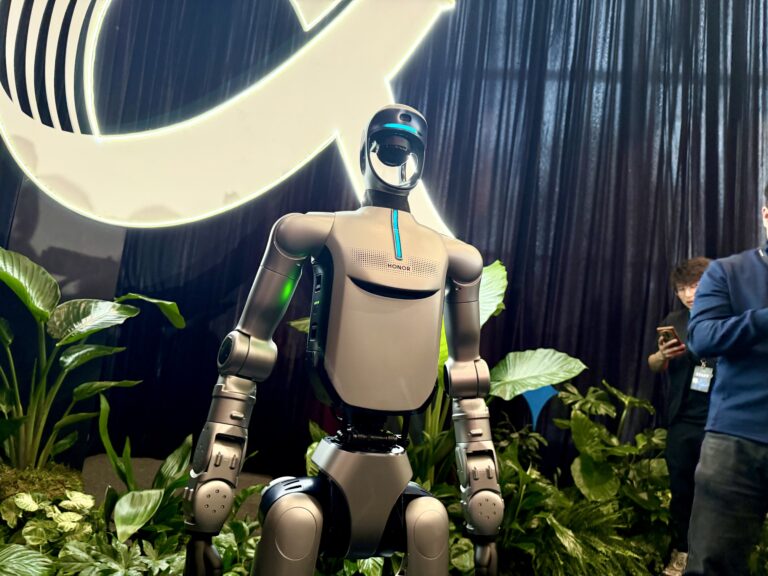
A humanoid robot opened this year’s Mobile World Congress with a carefully choreographed performance, signaling a subtle but meaningful evolution for a trade show historically centered on smartphones and telecom infrastructure.

Presented by Chinese technology group Honor, the machine was more than a spectacle: it was positioned as a physical embodiment of the company’s artificial intelligence ambitions. While many expected incremental upgrades or a new handset category, few anticipated a full-scale humanoid stepping into the spotlight.

A robot as a statement of intent

In the days leading up to its keynote, Honor teased an announcement that would go beyond a conventional smartphone launch. Speculation ranged from AI-powered services to a radically redesigned device. Instead, the company revealed both a new “Robot Phone” and a humanoid robot designed to illustrate its broader technological direction.

The smartphone itself features advanced on-device AI and a motorized rear camera module capable of automatically adjusting angles and tracking subjects in real time. By combining sensors, small motors and artificial intelligence, the device introduces a degree of physical movement rarely seen in handsets. The humanoid robot, unveiled moments later, appeared as an amplified version of the same philosophy: AI that does not merely compute, but acts.

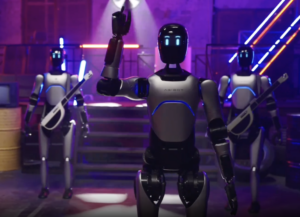
Standing upright and roughly human-sized, the robot joined professional dancers in a short routine before attempting a moonwalk, drawing audible reactions from the audience. Honor’s CEO then engaged the machine in a brief exchange, showcasing its ability to respond to voice commands. The demonstration concluded with a backflip — a carefully timed finale that reinforced the event’s theatrical dimension.

Between prototype and strategy

Despite the spectacle, many questions remain unanswered. Honor has not disclosed detailed technical specifications, nor has it outlined a clear roadmap toward commercialization. Observers are left to determine whether the humanoid is primarily a research platform, a branding exercise, or the first sign of diversification beyond the company’s core portfolio of smartphones, tablets and laptops.

Hands-on demonstrations after the keynote offered a closer look. The robot responded to basic commands and executed programmed sequences with relative precision. Yet its movements, though technically impressive, lacked full fluidity. Company staff remained nearby during interactions, suggesting that the system’s autonomy is still limited. For now, it appears better suited to controlled environments than to independent operation in public spaces.

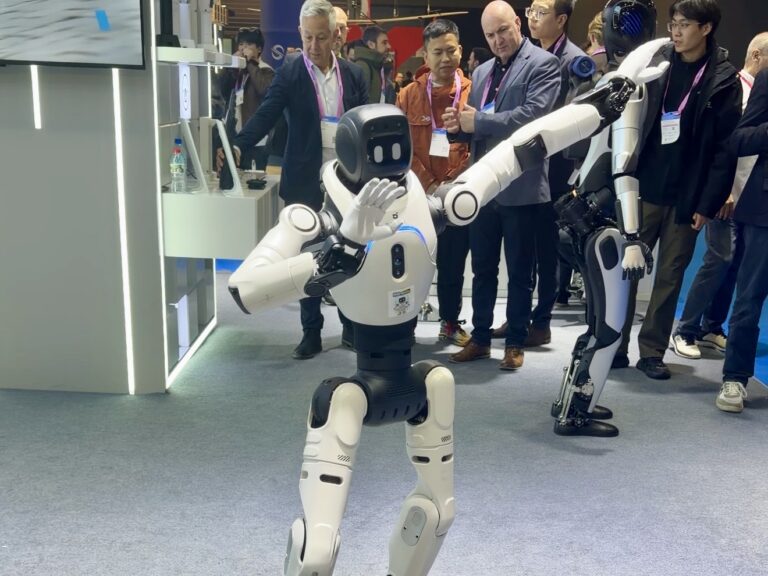
Even so, the broader significance extends beyond Honor alone. This year’s MWC features a noticeable uptick in robotics exhibitors (AgiBot, MagicLab), highlighting the growing convergence between artificial intelligence software and embodied machines. What was once confined to research labs is increasingly making its way onto commercial stages.

Honor’s showcase aligns with the industry’s push toward so-called “embodied AI” — systems capable of perceiving, moving and interacting in the physical world. By pairing a motorized smartphone with a humanoid robot, the company underscored its belief that the future of AI will not be limited to digital assistants on screens.

AgiBot: The Chinese Company Leading the Global Humanoid Robot Market

0

In the race for global leadership in humanoid robotics, AgiBot is emerging as one of the most serious contenders. The company says it generated $142 million in revenue in 2025 and sold nearly 5,000 robots — even as the global humanoid robot market remains in its infancy, estimated at around $500 million this year.

If those figures hold, AgiBot alone would account for more than a quarter of the global market, making it the world’s number one player in a sector that is still in the early stages of industrialization.

A sign of its growing prominence: the Chinese manufacturer — known domestically as Zhiyuan Robotics — is one of the few humanoid robotics companies present at the Mobile World Congress in Barcelona, taking place from Monday to Wednesday. The event serves as a strategic platform to showcase its international ambitions.

The G2: AgiBot’s Commercial Flagship

Founded in 2023, AgiBot set out to build versatile humanoid robots at relatively accessible price points. Its immediate focus has been industrial deployment at scale. Logistics, factories and warehouses represent the company’s primary target markets.

Agibot
The Agibot G2 Robot.

At the center of this strategy stands the G2, AgiBot’s commercial flagship. Launched in October and recently updated, the G2 is designed specifically for industrial environments — assembly lines, material handling and structured factory settings. It is the model most closely associated with the company’s reported revenue growth and large-scale deployments.

During its October 2025 launch event, four live demonstrations highlighted real-world use cases. In automotive parts manufacturing, the G2 worked alongside human operators on seatbelt lock cylinder assembly and material handling. For precision tasks, its force-controlled arms and learning algorithms enabled it to master RAM insertion in under an hour of training.

“We envision the G2 relieving humans from repetitive, labor-intensive and safety-risk-prone tasks, enabling people to focus on more creative work,” said Yao Maoqing, Partner at AgiBot and President of the Embodied Business Unit.

The A2 and the Broader Humanoid Vision

While the G2 drives industrial revenue, the A-Series — and particularly the A2 — reflects AgiBot’s broader ambition of building general-purpose humanoid systems.

Since launching the AGIBOT A1 in August 2023, the company has structured its portfolio into three main product lines: the A-Series for broad industrial adaptability, the G-Series for high-performance research and production scenarios, and the X-Series focused on advanced locomotion and demonstration use cases.

Agibot
The Agibot A2 robot.

The A2 is positioned as a more comprehensive humanoid platform, designed to operate across a wider range of scenarios. It represents AgiBot’s longer-term bet on embodied AI: a robot capable of handling diverse tasks rather than narrowly optimized factory routines.

In that sense, the A2 is closer to the general-purpose humanoid vision pursued by Western competitors, while the G2 remains optimized for immediate industrial scalability. The A2 recently made headlines after walking 66 miles in three days, setting a new Guinness World Record.

This dual-track strategy — industrial specialization with the G2, broader embodiment with the A2 — allows AgiBot to address both short-term revenue and long-term technological positioning.

Robots Trained by AI

Beyond hardware, AgiBot is investing heavily in artificial intelligence to accelerate robot learning. The company claims its machines can learn certain complex industrial tasks in as little as ten minutes.

Its approach, branded “Real-World Reinforcement Learning,” combines human teleoperation with algorithmic optimization. Human operators first guide robots remotely through a task, generating real-world operational data. AI systems then refine and stabilize the movements autonomously.

AgiBot operates a dedicated robotic learning center where workers teleoperate robots to produce training data for its embodied AI models — a strategy designed to accelerate skill acquisition while building proprietary datasets.

In parallel, the company has diversified its commercial experimentation. In December, it launched Qingtian Rent, a robot rental platform offering humanoid and quadruped robots for events and commercial use. Through a WeChat mini-program, robots can be rented for trade shows, business meetings, concerts and weddings. Pricing ranges from around 500 yuan per day for the D1 Ultra quadruped to nearly 100,000 yuan per day for large-scale event packages.

A Global and Mainstream Strategy

AgiBot’s ambitions now extend far beyond China’s industrial ecosystem. The company is pursuing a deliberate global and mainstream positioning strategy.

Its presence at Mobile World Congress in Barcelona signals more than simple product promotion. By appearing at one of the world’s largest technology events — traditionally dominated by telecom and consumer electronics giants — AgiBot is positioning itself as a global technology brand rather than a niche robotics supplier.

At the same time, the company is venturing into cultural territory. After announcing its European expansion at a Munich launch event, AgiBot revealed a partnership with a Paris-based haute couture house, whose identity is expected to be disclosed soon.

Promotional materials show its humanoid robots walking through fashion boutiques and artistic Parisian streets — a carefully staged encounter between industrial intelligence and luxury craftsmanship.

Honor enters the humanoid robot race at MWC: price, release and specs

0

The humanoid robot revolution is entering a new phase — and it is no longer confined to automakers and specialized robotics startups. Chinese smartphone manufacturer Honor will present its first humanoid robot this Sunday at Mobile World Congress (MWC) in Barcelona.

The announcement reflects a broader shift in the technology industry. Embodied artificial intelligence is increasingly viewed as the next hardware frontier, extending beyond screens and voice assistants into physical machines capable of moving, manipulating objects and interacting in the real world. At the same time, the competitive landscape is tightening, with American and Chinese firms racing to dominate what could become a multi-billion-dollar global market.

Here is what we know — and how this fits into the wider industrial and geopolitical contest.

A humanoid robot linked to Honor’s AI-powered “robot phone”

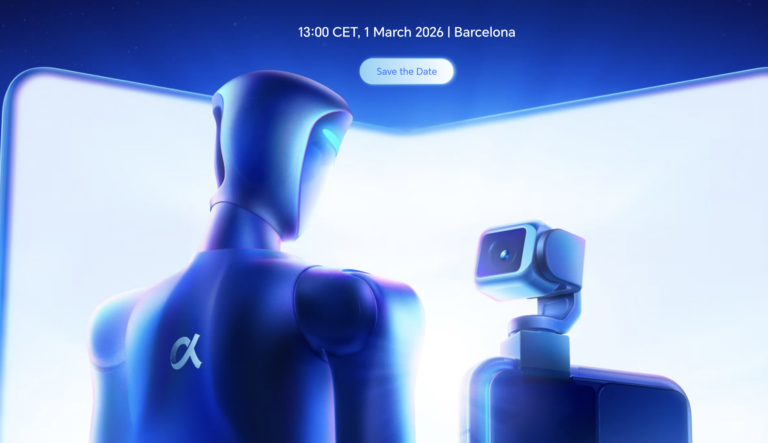
So far, Honor has released only limited technical details. A teaser video shows a sleek black humanoid robot with glowing blue eyes, but the company has not disclosed specifications such as height, weight, degrees of freedom, payload capacity, battery life or the precise AI architecture powering the system.

According to a Bloomberg report, the robot may focus on consumer-oriented applications rather than on industrial automation or heavy domestic labour. Shopping assistance has been cited as a potential use case, suggesting retail interaction or personal AI support rather than factory-floor deployment.

The humanoid will be showcased alongside Honor’s so-called “robot phone,” first introduced at CES earlier this year. The teaser footage implies close integration between the two devices, with the robot shown approaching the smartphone as if preparing to interact with it.

Honor describes the concept in deliberately evocative language, referring to a device with “the super brain of AI” and “the super mobility of a robot” that can transform into a personal camera. The phone itself features a small robotic arm equipped with a camera module, functioning as an integrated stabilization system comparable to products from DJI, which are widely used by content creators.

No pricing, production schedule or commercialization roadmap has been confirmed for the humanoid robot. At this stage, it could represent either a near-term consumer product or a strategic demonstration designed to signal Honor’s long-term AI ambitions.

After Tesla Optimus: Unitree, Hyundai and Figure accelerate the global battle

Honor’s entry comes as competition in humanoid robotics intensifies. Tesla helped bring mainstream attention to the sector with its humanoid robot, Optimus. Although CEO Elon Musk has outlined ambitious scaling goals, large-scale production remains in early phases, with initial units expected to be deployed internally before broader commercialization.

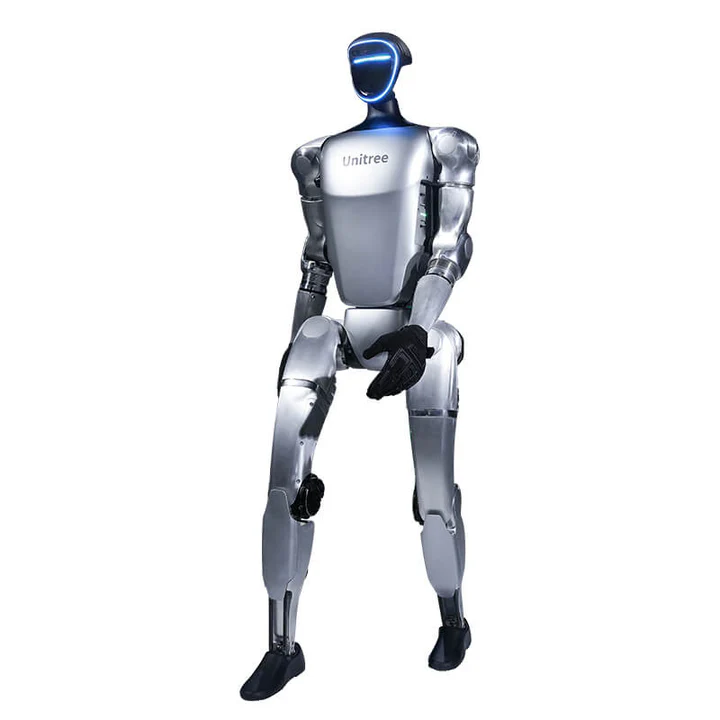
In China, Unitree has introduced the G1 humanoid robot, positioning it as a more affordable platform that leverages China’s dense manufacturing ecosystem. By controlling key components and focusing on cost efficiency, Unitree is attempting to make humanoid hardware economically viable at scale.

In the United States, Figure AI is developing its next-generation humanoid, often referred to as Figure 03. The company is targeting logistics and industrial environments first, betting that enterprise adoption will provide clearer return-on-investment metrics before expanding toward consumer applications.

Meanwhile, Hyundai, through its robotics activities, continues to advance mobility and manipulation technologies, reflecting the automotive sector’s growing interest in humanoid platforms as extensions of manufacturing automation.

Beyond product announcements, a broader US–China strategic rivalry is emerging. The United States maintains leadership in advanced AI models, semiconductor design and venture capital funding. China, however, benefits from large-scale manufacturing capacity, supply chain integration and state-backed industrial policy. Research firm IDTechEx estimates that the humanoid robot market could reach $30 billion by 2036, but ultimate dominance will likely depend on cost reductions, AI performance, chip access and regulatory environments.

Honor’s unveiling at MWC illustrates how quickly humanoid robotics is expanding beyond niche engineering circles into mainstream consumer technology strategy. The core question is no longer whether humanoid robots will reach the market. It is which ecosystem — American or Chinese — will succeed in industrializing them at scale first.

Meet the 5 Most Anticipated Humanoid Robots in 2026

Long considered artifacts of the future on the same level as flying cars, humanoid robots are finally preparing to enter everyday life. All signs point to 2026 as the year the market for humanoid robots truly accelerates, with major announcements and early industrial deployments around the world.

In just a few days, Honor is expected to unveil its first humanoid service robot at the Mobile World Congress in Barcelona. Meanwhile, Tesla is preparing large-scale production of its Optimus robot, targeting global commercialization as early as 2027, although no official release date has been confirmed. Elon Musk has previously suggested a long-term price objective between $20,000 and $30,000 once production scales.

Some analysts describe this moment as the beginning of a new industrial revolution, comparable to the rise of personal computers, smartphones and artificial intelligence. Research firm IDTechEX estimates that the humanoid robot market could reach $30 billion by 2036, driven by rapid advances in AI, hardware miniaturization and manufacturing scale.

We present here the five humanoid robots most likely to shape the coming months and years.

Tesla Optimus

Tesla Optimus

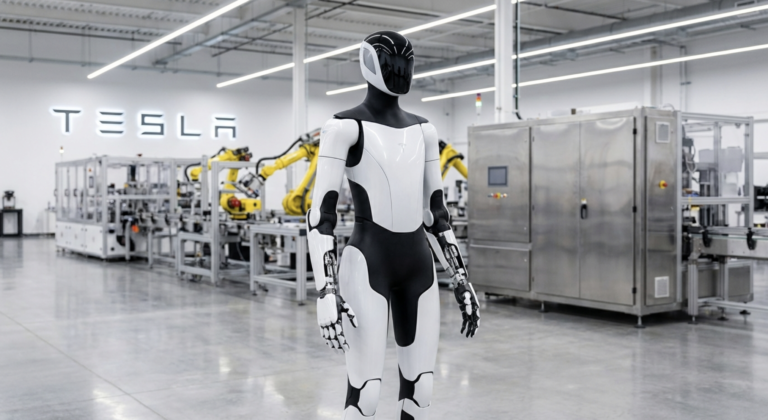
After electric vehicles, Tesla is betting on humanoid robots. The company led by Elon Musk is preparing to industrialize its humanoid robot Optimus, with commercial sales expected to begin as early as 2027, though no official preorder process has been opened yet.

Tesla Optimus is currently in its second generation, with a third version anticipated in the coming months. The robot stands approximately 1.73 meters tall and weighs around 57 kilograms. Designed with human-like proportions, it is intended to operate in environments built for people — climbing stairs, carrying objects and navigating industrial facilities without structural modifications.

The robot is powered by a 2.3 kWh battery, described as sufficient for “a light workday.” Tesla designs its own actuators, electronics and AI systems in-house, allowing it to pursue economies of scale similar to those achieved in its automotive business. Optimus relies primarily on camera-based vision, using AI systems derived from Tesla’s Full Self-Driving neural network architecture to perceive and interact with its environment.

Tesla has indicated that Optimus will eventually follow a hybrid model: hardware sales combined with optional software subscriptions for advanced capabilities and updates. While no official price has been announced, Tesla’s long-term target remains between $20,000 and $30,000.

Unitree G1

Unitree G1

Considered one of the main competitors to Tesla’s Optimus, the Unitree G1 recently gained global visibility. A viral video showed a troupe of Unitree G1 humanoid robots performing a synchronized dance during China’s Spring Festival Gala, as the country welcomed the Year of the Horse in front of hundreds of millions of viewers.

First unveiled in 2024, the G1 — the smaller sibling of Unitree’s H1 — has undergone significant upgrades since its initial presentation. It was designed with the ambition of becoming the first truly mass-market humanoid robot, and it appears well positioned to pursue that goal.

The G1 is already available for purchase at $13,500, a relatively accessible price point for a humanoid robot, comparable to that of a compact car.

To reach this price level, Unitree made strategic design trade-offs, notably by reducing the robot’s size. The G1 stands just 1.27 meters tall and weighs approximately 35 kilograms. With proportions closer to those of a child, as seen in demonstration videos from China where it performs kung fu movements alongside young students, the smaller form factor also contributes to improved stability and lower energy consumption.

In terms of dexterity, the G1 features an extra-large joint movement range and between 23 and 43 joint motors depending on configuration. Its control system is driven by imitation learning and reinforcement learning techniques. The robot is equipped with force-control dexterous hands capable of precise object manipulation. By combining force-position hybrid control, it can perform delicate operations with a level of sensitivity and reliability designed to approximate human hand movements.

The robot integrates a removable battery housed in the torso, with an announced operating time of approximately two hours, depending on usage.

For perception and navigation, the G1 includes RGB cameras, optional depth sensors depending on the version, and integrated microphones. It is compatible with external AI models, allowing developers to customize and extend its capabilities.

While conceived in part to test the consumer market, the G1 is also likely to attract universities, AI research labs and startups. Its relatively affordable pricing and modular architecture make it a potential development platform for building new applications, experimenting with embodied AI systems, and accelerating research in humanoid robotics.

Figure 03

Figure 3 robot
Le robot Figure 3 peut arroser les plantes.

The humanoid robot Figure 03, developed by the startup Figure AI, is presented as a general-purpose robot designed for domestic tasks. According to the company, it can fold laundry, load dishwashers, organize household items and water plants.

Figure AI plans to scale production through the construction of a manufacturing facility called BotQ, designed to eventually produce up to 12,000 units per year. However, while manufacturing ambitions are clear, large-scale deployment will depend on technical validation and sustained real-world performance.

Figure 03 stands approximately 1.73 meters tall and weighs around 61 kilograms. It can carry loads of up to 20 kilograms and has a stated battery life of roughly five hours, depending on usage conditions.

The robot is powered by Helix, Figure’s proprietary AI system. Helix is described as a generalist Vision-Language-Action model that integrates perception, language understanding and motor control into a unified neural architecture. It allows continuous upper-body control, manipulation of unfamiliar objects based on natural language instructions and coordination between multiple robots. The system runs on embedded, low-power GPUs inside the robot itself.

No official release date has been announced, and the level of full autonomy in unstructured home environments remains to be independently validated.

Agility Robotics Digit

Agility Digit

Developed by Agility Robotics, the humanoid robot Digit is emerging as one of the first humanoids moving from pilot programs to real commercial deployment. Designed specifically for logistics and manufacturing environments, Digit is built to operate directly on facility floors without requiring costly infrastructure changes.

Standing approximately 1.75 meters tall and weighing around 65 kilograms, Digit is capable of handling repetitive material-handling tasks such as transporting bins and supporting supply chain workflows. Unlike humanoids marketed primarily for domestic use, Digit focuses on industrial return on investment. Agility pairs the robot with Agility Arc, a cloud automation platform used to deploy, monitor and manage fleets of Digits at scale, signaling a shift toward integrated hardware-plus-software automation.

In February 2026, Agility Robotics announced a commercial Robots-as-a-Service (RaaS) agreement with Toyota Motor Manufacturing Canada following a successful pilot deployment. Under the agreement, Toyota plans to deploy Digit in its production facilities to assist with manufacturing, supply chain and logistics operations.

The companies indicated that the robots will initially support employees in repetitive and physically demanding tasks, with the longer-term objective of improving safety and operational efficiency. Toyota joins other major corporations — including Amazon, GXO and Schaeffler — that have tested or deployed Digit in industrial settings.

Rather than positioning Digit as a consumer product, Agility is advancing a human-centric automation model aimed at augmenting the workforce amid global labor shortages. While pricing is not publicly disclosed, deployments are structured through service agreements rather than direct retail sales. If scaled successfully, Digit could become one of the first humanoid robots to demonstrate sustained economic viability in real production environments.

AgiBot A2 Ultra

Agibot A2 Ultra
Le robot Agibot A2 Ultra.

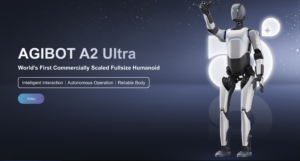
China’s humanoid robotics race is not limited to Unitree. The A2 Ultra, developed by AgiBot (Shanghai Zhiyuan Robotics), represents a different strategic approach: prioritizing public-facing service deployment and endurance performance over immediate industrial heavy lifting.

Standing approximately 1.69 meters tall and weighing around 69 kilograms, the AgiBot A2 Ultra features roughly 40 degrees of freedom, enabling fluid upper-body gestures and stable bipedal locomotion. The robot is designed for reception, guidance and interactive tasks in controlled indoor environments such as exhibitions, retail spaces and transport hubs. Its onboard AI compute — reported in the hundreds of TOPS range — supports speech interaction, navigation and real-time perception.

One of the most notable demonstrations associated with the A2 series was a long-distance autonomous walking test covering more than 100 kilometers over several days, highlighting durability and balance rather than manipulation strength. Battery life is typically cited at around two to three hours per charge, with swappable battery options to reduce downtime.

Unlike platforms explicitly targeting factories or households, the A2 Ultra appears positioned as a bridge between showcase robotics and scalable service automation.

Humanoid Robots Market 2026: Tesla vs. China in the Robot Race

0

The humanoid robots market in 2026 is no longer a speculative future scenario. It is an emerging industrial sector shaped by geopolitical rivalry, artificial intelligence breakthroughs, manufacturing scale, and the economics of labor automation. What began as a collection of viral demos and research prototypes is now becoming a strategic battleground between China and the United States, with Tesla positioned at the center of the Western response.

In 2025, between 13,000 and 18,000 humanoid robots were sold globally. Nearly 90% of those units came from Chinese companies. The numbers remain small compared to traditional industrial robotics or electric vehicles, but they mark a structural shift. Humanoid robots are moving from laboratories into early commercial deployment, and the distribution of power in this early phase may shape the industry for decades.

Companies such as Unitree and Agibot have shipped thousands of humanoids. Shenzhen-based LimX Dynamics is already expanding internationally. On the American side, Tesla, Figure AI and Agility Robotics are scaling more cautiously, focusing on autonomy and AI performance.

According to long-term projections from major financial institutions, the humanoid robot market could reach $38 billion by 2035 and potentially expand toward $5 trillion by 2050. These estimates assume widespread enterprise adoption, dramatic cost reductions, and breakthroughs in embodied AI. While those numbers are speculative, they highlight the scale of ambition attached to this sector.

Humanoid Robots Market Size and Growth in 2026

The humanoid robots market in 2026 remains in its early growth phase. Installations are still concentrated in research labs, government-backed pilot programs and industrial test environments. China accounted for more than 85% of global deployments in 2025, while the United States represented roughly 13%. Other regions remain marginal players for now.

Revenue is difficult to standardize because pricing varies widely depending on configuration and capability. Base models from Chinese manufacturers can fall in the $13,000 to $23,000 range, while Western projections remain higher without large-scale production. The cost curve will be decisive. If prices decline rapidly while performance improves, enterprise adoption could accelerate significantly.

In the short term, 2026 is defined by experimentation and controlled industrial rollouts. In the medium term, from 2028 to 2035, analysts expect broader enterprise deployments in logistics and manufacturing. Beyond 2035, more ambitious forecasts envision tens of millions of units annually, though such projections depend heavily on technical breakthroughs that are not yet guaranteed.

Why China Leads the Humanoid Robot Market

China’s early dominance is not accidental. The sector was designated a priority industry in the country’s 14th Five-Year Plan in 2021, unlocking public investment, infrastructure support and ecosystem development. This approach closely mirrors the strategy used to build global leadership in electric vehicles and battery production.

Companies like Unitree sold approximately 5,500 humanoids in 2025, while Agibot shipped more than 5,000 units. Collectively, Chinese firms delivered roughly 13,000 robots worldwide, dramatically outpacing American competitors. Even Tesla’s publicly stated goal of producing 5,000 humanoids in 2025 was not achieved.

China’s advantage rests on vertically integrated supply chains. The country controls critical inputs such as rare earth materials, high-performance magnets, actuators, batteries and power electronics. Humanoid robots are complex electromechanical systems requiring precise hardware coordination. Unlike purely digital AI platforms, they depend on manufacturing depth and component reliability. China’s domestic ecosystem reduces cost and shortens iteration cycles.

Pricing illustrates the impact. Unitree advertises its G1 humanoid at roughly $13,500 base price. LimX Dynamics offers its base model around $22,660. These price points are significantly lower than early Western expectations. Lower pricing accelerates deployment, and deployment generates operational data that improves AI systems over time. In embodied AI, scale and data are deeply interconnected.

Tesla and the American Strategy: Betting on Advanced AI

While China dominates early shipments, the United States is betting that intelligence, not volume, will define long-term value. Tesla’s Optimus robot embodies that strategy.

Under the leadership of Elon Musk, Tesla has positioned Optimus as a general-purpose humanoid capable of performing factory tasks before expanding into broader applications. Optimus units are already operating inside Tesla facilities for limited tasks, and public sales are projected for late 2027.

Tesla’s approach prioritizes advanced autonomy, multi-step reasoning and adaptability in unstructured environments. The assumption is that hardware can be scaled later, but superior AI capability is harder to replicate. If Optimus demonstrates reliable task chaining, real-time decision-making and long-duration operation, it could command premium pricing and enterprise trust.

Other American players such as Figure AI and Agility Robotics are also focusing on embodied AI systems capable of interacting dynamically with complex environments. Analysts frequently emphasize that choreographed demonstrations do not equate to economic productivity. What matters is reliability over hours of operation, precision manipulation, error recovery and the ability to integrate into real industrial workflows.

The AI model race remains open. If breakthroughs in embodied intelligence occur primarily in the United States, the competitive balance could shift. If Chinese firms close the AI gap while maintaining manufacturing scale, their dominance could deepen.

Enterprise Use Cases Driving Market Expansion

In 2026, the humanoid robot market is fundamentally enterprise-driven. Most deployments are concentrated in structured industrial settings where tasks can be partially standardized.

Manufacturing represents the most immediate opportunity. Factories are designed for human workers, and a bipedal robot capable of using existing tools theoretically requires less infrastructure redesign than fixed industrial arms. Potential applications include assembly assistance, quality inspection and material handling.

Logistics and warehousing environments also offer strong potential. Warehouses are complex, dynamic spaces that demand flexibility. A humanoid robot capable of navigating shelves, handling boxes and managing exceptions could provide productivity gains in e-commerce fulfillment centers.

Healthcare and elder care remain longer-term prospects. These sectors require high safety standards, advanced perception and delicate manipulation capabilities. Regulatory hurdles and reliability requirements make near-term adoption unlikely at scale, but demographic trends suggest strong long-term demand if technical barriers are overcome.

Economic Viability and Labor Impact

The central economic question is whether humanoid robots can achieve cost-effective productivity compared to human labor. In advanced economies, annual wages in manufacturing and logistics often exceed $40,000 to $60,000. If a humanoid robot priced between $15,000 and $25,000 can perform repetitive tasks reliably for multiple years, the return on investment becomes compelling.

However, total cost of ownership extends beyond purchase price. Maintenance, software updates, downtime risk and training costs must be factored into enterprise calculations. Reliability remains the critical bottleneck. Until humanoids demonstrate industrial-grade uptime, adoption will proceed cautiously.

If reliability improves and costs decline, the macroeconomic implications could be profound. Humanoid robots represent a universal automation interface, capable of operating in environments originally built for humans. Unlike fixed automation systems, they offer flexibility across sectors, potentially accelerating structural labor transformation.

Geopolitical Stakes and Market Fragmentation

The humanoid robot market is increasingly geopolitical. China is expanding into the Middle East and Europe, seeking to establish international partnerships. At the same time, U.S. policymakers are unlikely to tolerate deep dependency on Chinese humanoid supply chains for critical industries.

The precedent set by semiconductors and electric vehicles suggests that subsidies, export controls and industrial policy responses are likely. The market may fragment into regional ecosystems rather than remain globally unified. Standards, software stacks and supply chains could diverge along geopolitical lines.

Tesla sits at the center of this dynamic. As a vertically integrated American manufacturer with AI ambitions, it represents a strategic counterweight to China’s hardware scale. Whether Tesla can accelerate production while maintaining AI leadership will shape the Western position in this emerging sector.

2026 as the Inflection Point

The humanoid robots market in 2026 is still small in volume but enormous in strategic importance. China leads in manufacturing scale, cost efficiency and early deployment. Tesla and other U.S. firms are focusing on advanced autonomy and long-term intelligence advantages.

The next two to three years will determine where deployment data accumulates, which companies establish industrial credibility and who defines technical standards. Early momentum matters because embodied AI improves through real-world exposure. Hardware scale and AI sophistication are reinforcing loops.

Humanoid robots are transitioning from experimental prototypes to early industrial assets. The race between China and Tesla is not simply about robotics; it is about manufacturing sovereignty, AI leadership and the future architecture of work.

The outcome remains uncertain. But 2026 marks the moment when the humanoid robot market moved from vision to measurable competition.


How much does a humanoid robot cost in 2026?

If flying cars are still a fantasy, that is no longer the case for humanoid robots, which are now an increasingly established reality in our daily lives.

Even though the technology is still recent, it is developing at a rapid pace and more and more players are entering this field, notably massive companies such as Tesla.

Of course, anything new tends to come with a relatively high price tag, and while prices currently run into several thousand euros for most models, this could quickly change over the coming years with the explosive growth of this industry.

Let’s take a look at the different options and pricing structures already available. Mainly, there are two models, either independent of each other or complementary: direct purchase or renting such a robot through a monthly or annual subscription.

Tesla Optimus

Tesla Optimus is not yet available, so it is difficult to assess its performance, but Elon Musk has high expectations for this robot, and Tesla factories are already beginning to reorganize to produce it on a large scale.

Although all of its features remain speculative for now, its primary purpose will be to serve as a household assistant capable of performing various tasks within the home.

While an initial price of around $30,000 was first suggested, Elon Musk has stated that he is aiming for a release by late 2026 or even early 2027 at a price below $20,000.

Neo from 1X

The release of Neo is imminent, particularly in the United States. Numerous videos showcasing its various capabilities have already circulated widely online.

It is also designed as a humanoid robot intended to help with everyday household tasks such as doing the dishes, cleaning, carrying groceries, or serving drinks.

Two purchasing options are already available for Neo. The premium option, priced at $20,000, includes a three-year warranty, priority on the order list, and advanced support. The second option is the standard plan, offered as a monthly subscription at $499 per month, providing the basic Neo robot package.

Atlas from Boston Dynamics

Boston Dynamics no longer needs an introduction in the robotics sector. Recognized for years, its robotic dog model is already a success, notably used in rescue missions as well as in certain specific industries where it is not always easy for a human to venture into confined environments. YouTubers have also widely used this robot in various concepts over the years.

However, today the one that interests us is Boston Dynamics’ humanoid robot, Atlas. It features a two-legged design and, as the brand often does, it will initially be intended for professional use. Although not all of its specifications are yet known, it will be able to serve in numerous industrial tasks, particularly by specifically learning over time to carry out requested needs with precision.

As for the price, since Boston Dynamics is a company primarily focused on the professional world, its pricing reflects that positioning. Atlas is no exception, as it is expected to cost around $150,000 and be available starting in 2027.

G1 from Unitree

Unitree is a Chinese company that has already developed several robots, similar to Boston Dynamics. This time, it is introducing its humanoid unit, G1.

Standing just over 1.3 meters tall and weighing 35 kilograms, this robot is designed to be an all-purpose household product. Whether it’s cleaning, doing the dishes, or handling various household chores, it is meant to provide full assistance, notably thanks to its system offering great dexterity and precision, featuring three fingers.

Already available for sale, it costs at least $13,500 depending on the selected options, not including shipping. It has a battery life of around two hours, which is slightly less than its competitors.

What determines the price of a humanoid robot?

For now, most of these robots cost more than $10,000, which makes them as expensive as a car. There are several reasons for this.

First of all, it is a new and rapidly developing industry, so production volumes remain low. We are only at the beginning, and consequently, smaller quantities mean significantly higher production costs.

In addition to manufacturing costs, these are new technologies that involve substantial development expenses, which are also reflected in the final price of the product.

Finally, the components required to manufacture these humanoid robots are still very expensive and scarce. Likewise, a new industry means there are few optimizations in place to reduce the manufacturing costs of these components, which further increases the final price of these robots.

Of course, if humanoid robots become a standard not only in professional environments but also among private individuals, prices will decrease over time with further advancements and years of development. This is generally the case for any new technology once widespread adoption occurs.

Is it worth buying a humanoid robot right now?

The real question would rather be: do you need one for essential tasks? Indeed, for now, most of these humanoid robots are far from perfect.

The first models will of course work, but like any new technology, it takes time to develop and improve them (compare an iPhone from 15 years ago to one today). Whether in terms of software (notably AI) or hardware (everything physical), there is still significant progress to be made.

All of these robots are now designed to be capable of moving around and offer good dexterity and stability, but their AI will still require further development, as will their ability to perform tasks as quickly as a human would.

Therefore, buying a humanoid robot at this stage is more suited to professionals and industries with very specific tasks to carry out. For private individuals, while these robots may become essential to our daily lives in the more or less near future, for now their price and overall performance make them expensive products aimed primarily at the most curious or those who can afford one.

Beyond purchasing one of these humanoid robots which are, of course, covered by warranties of varying lengths depending on the manufacturer there is still a maintenance cost to take into account.

Indeed, just as it is sometimes necessary to repair a computer or take your car to the garage, some of these new products will require repairs or part replacements over time. This is particularly true when it comes to batteries, which are still far from perfect.

Consequently, you need to consider this factor when buying a humanoid robot. In conclusion, at present these products are mainly reserved for professionals and for individuals who can afford them out of curiosity. We are not yet at the stage of a fully accessible and highly efficient product, but the sector is evolving rapidly, and all of this could change in the coming years.